MentalMatch: Increasing Transparency in Mental Healthcare
Project Information
- Team: Kaitlin Simpson, Marisa Behnke, Vanya Sharma, Adam Webber
- Roles: User Researcher, Product Designer
- Duration: 4 months (September - November 2020)
Project Overview
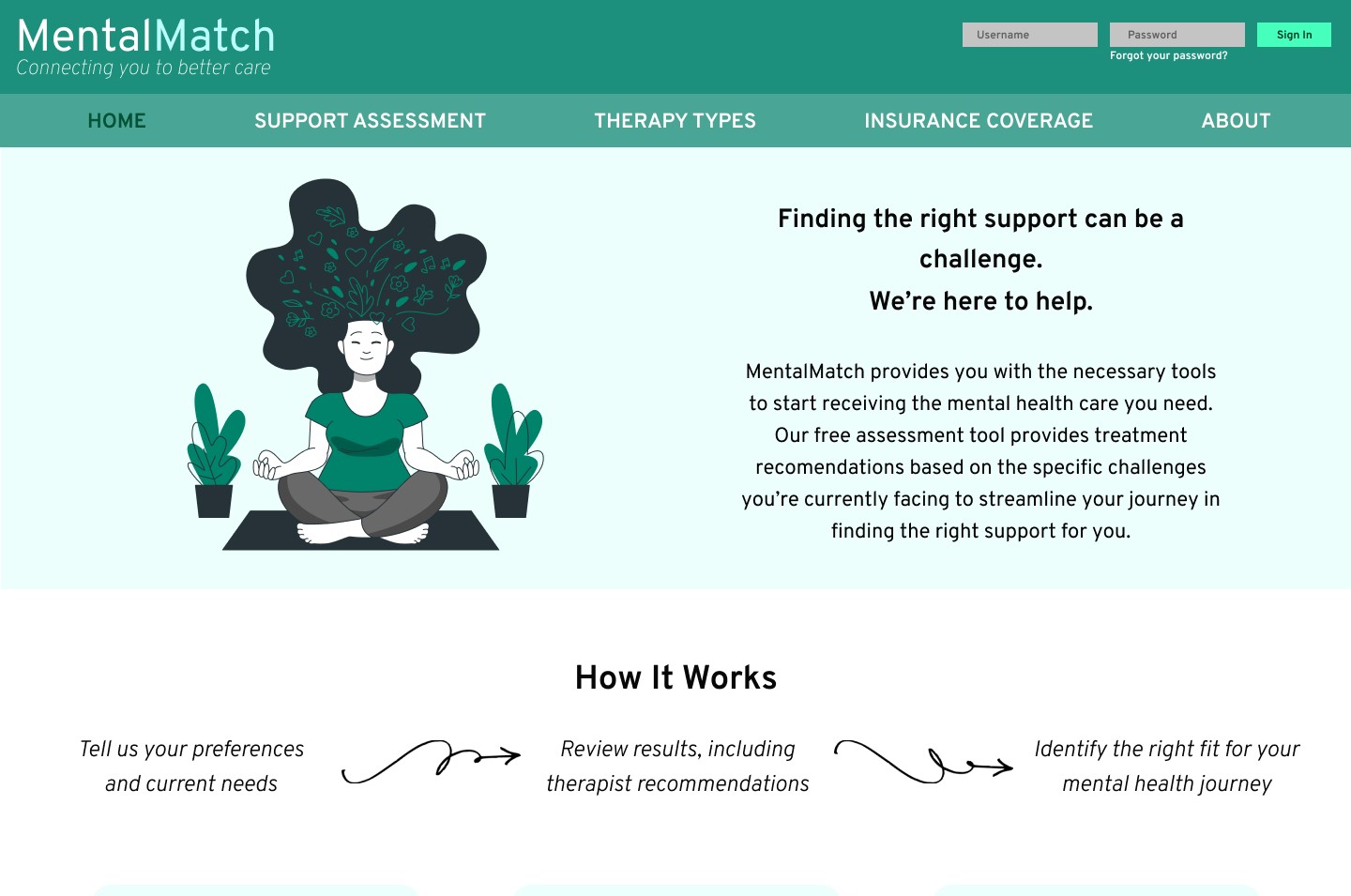
MentalMatch is a web application designed in response to the persisting challenge of accessing mental health care services. As part of a special topics course on the intersections of behavioral science and UX, our team employed a human-centered research and design process in order to understand users' wants and needs when interacting with systemic barriers. The proposed design is a web-application meant to guide individuals through the process of accessing and understanding mental health services.
Project Background
This research project was conducted as part of a special topics course on Behavioral Science and UX as part of DePaul University’s Human-Computer Interaction master’s program. The project deliverables were the culmination of a three-month research project focusing on the domain of mental health, beginning with an initial question of behavioral change: how can we increase the uptake of mental health services? The proposed solution, MentalMatch, is a mid-fi prototype of a site designed to better support individuals in researching mental health care, from learning about the process of therapy to insurance coverage and potentially matching individuals with mental health professionals.
Problem Statement
While strides have been made in increasing the accessibility of mental health services, such as the use of telehealth and virtual ‘therapeutic’ services (e.g., BetterHelp and Headspace), many barriers still exist in seeking treatment. Stigma surrounding mental health still persists, often resulting in delays in individuals seeking treatment which can further negatively impact their health. Additional systemic barriers, such as the cost of treatment and/or lack of health insurance can be significant factors in preventing individuals from seeking and receiving care.
Users & Stakeholders
This project’s original target audience were those whose mental wellbeing had been negatively impacted by the COVID-19 pandemic, whether they were previously healthy, or had a history of mental illness and were experiencing relapses or exacerbated symptoms.
As the project developed, we shifted our focus to any individual who had an existing mental illness, were beginning to exhibit symptoms of mental illness or distress, or simply those who felt they would benefit from receiving mental healthcare.
Additional stakeholders we considered throughout the project were healthcare professionals, such as therapists, psychiatrists, primary healthcare workers, and community healthcare workers. We also considered external influencers, such as friends and family, and health insurance companies as potential stakeholders.
Process & Methods
Our process began with a literature review that focused on a number of inquiry areas relating to mental health and the COVID-19 pandemic, such as the burden of excessive virtual meetings, the effect of quarantine on interpersonal relationships, or the financial burden of mental health treatment amidst the pandemic and economic recession. Based on our initial research, our team created a research plan in order to better understand our audience and narrow our focus. We crafted four hypotheses to help guide our research:
- Increased education surrounding mental health stigma will result in an increase in individuals seeking mental health services because past research has demonstrated that educational interventions have been found to be effective in reducing self-stigma in patients.
- Individuals with strong social support systems are more likely to seek out mental health services than those without because past research has indicated outcomes are determined by quality of responsive support and accessibility to interventions.
- Individuals with reduced structural barriers will have greater access to mental healthcare services based on results from the National Comorbidity Study and other studies on the correlation to cost, employment, insurance, and treatment for mental health.
- COVID-19 has helped alleviate stigma around seeking mental health services because a larger number of individuals are experiencing additional, compounding stress, and seeking professional help.
Methodology
We conducted eight interviews with both healthcare practitioners and individuals who reported being impacted by the COVID-19 pandemic and were interested in seeking support from a mental health professional.
The interviews were conducted remotely and lasted from 30 minutes to 1.5 hours. All interviews followed the same discussion guide and included cue cards as a research tool to assist participants in sharing their experiences. These cue cards noted potential Influencers and Activities the participant had engaged with as a coping mechanism during the COVID-19 pandemic.
Findings
From our research interviews, we combined our data via affinity diagramming and found the four following themes:
- Lack of accessibility was identified as a barrier to seeking or participating in mental health services. This was predominantly characterized by either a lack of insurance coverage or as an expensive, personal financial burden.
- Another accessibility concern was that the process of finding a provider can be overwhelming and daunting.
- Participants provided ideas around improving accessibility, such as free healthcare, additional virtual service offerings, or a way to collect and display feedback on providers.
- Public stigma is improving, but there appears to be a varying level of acceptance based on the perceived severity of the illness.
These four themes allowed us to restructure our focus, shifting from looking at COVID-19’s impact on mental health to looking at the barriers in access mental health care in general.
Frameworks for Understanding
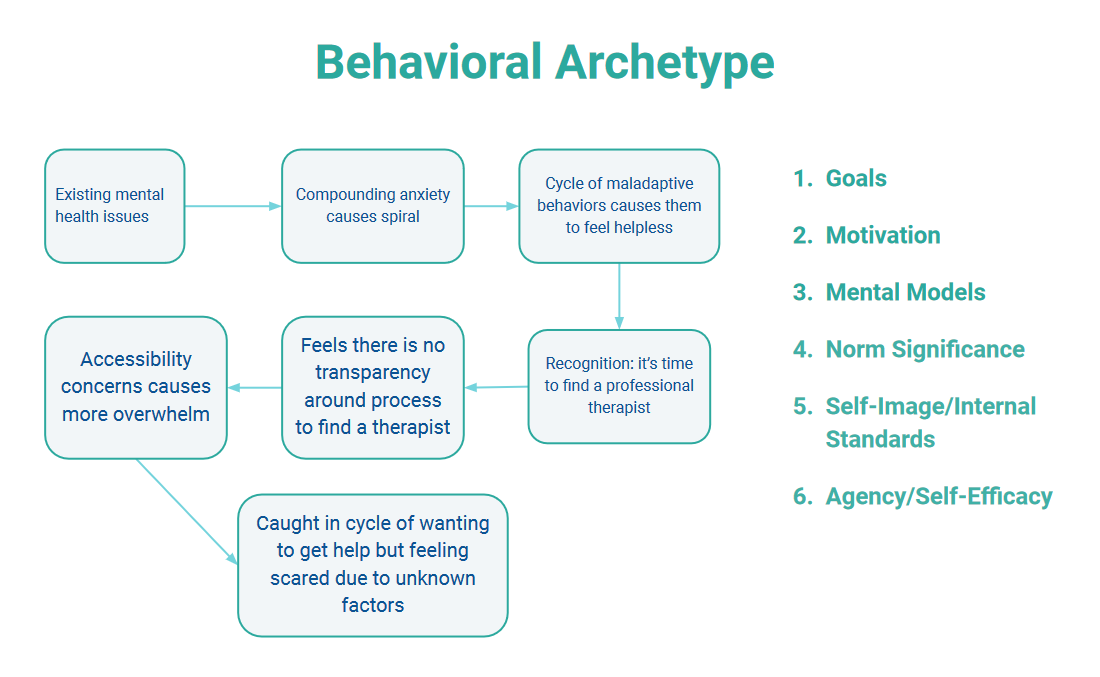
Using the themes from our research, we crafted a behavioral archetype and associated journey map to further refine our focus.
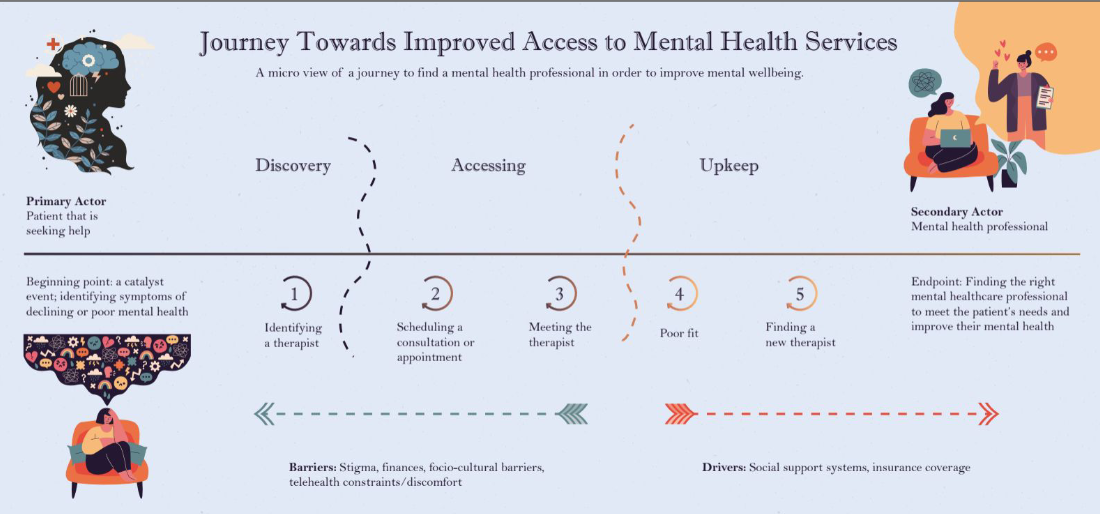
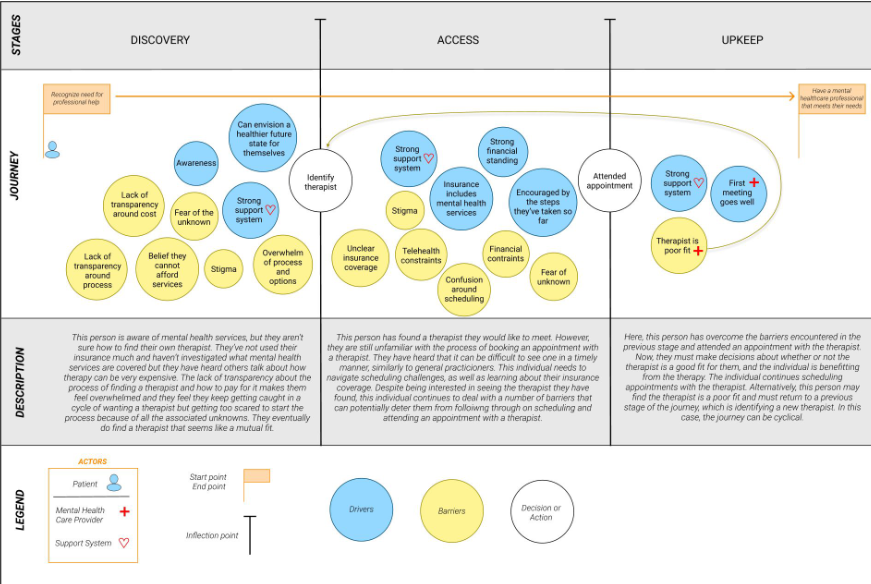
Our initial journey map was reviewed by peer researchers, and we were given feedback on how to better depict key elements, such as our barriers, drivers, and inflection points. As well, we needed to better represent the possible cyclical nature of the upkeep stage. Our team iterated our journey map and developed a second version:
Design Strategy
Following the second iteration of our journey map, we were able to begin ideating a design strategy. We focused on what opportunity areas we could best address, and which key decisions the user needed to make that we could best attempt to leverage.
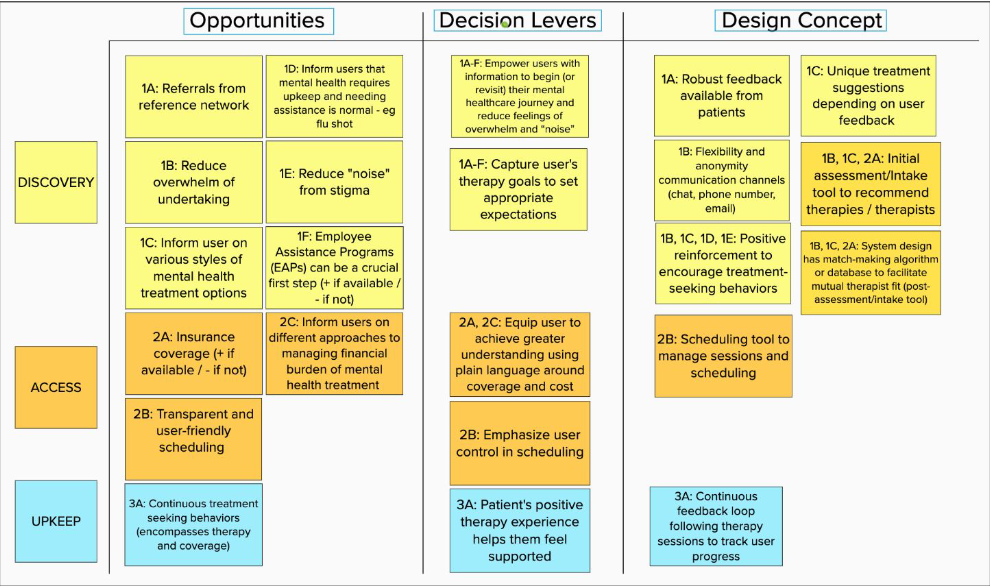
We knew that our tool should have the following components to best empower and equip our users with information to begin or revisit their mental health journey:
- An assessment tool to capture user goals and preferences, prioritizing a mutual fit between patient and provider.
- 2. Site content that informs users on various types of treatment types and assists in guiding them through insurance questions relating to mental healthcare.
Design
Following the creation of our design strategy, we prioritized the first stage of our journey—the discovery stage. As our focus narrowed down to how we could best increase transparency in accessing mental health services, we created a prototype that would inform and equip individuals about the process of identifying a therapist.
We began our design process by performing a design charrette. We discussed and agreed upon a single design that combined like-ideas and adequately addressed the decision levers and concepts presented in our design strategy.
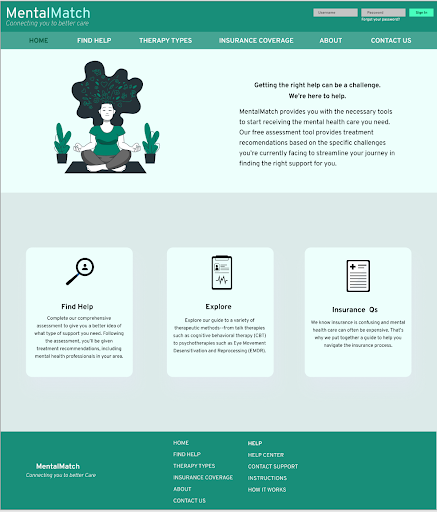
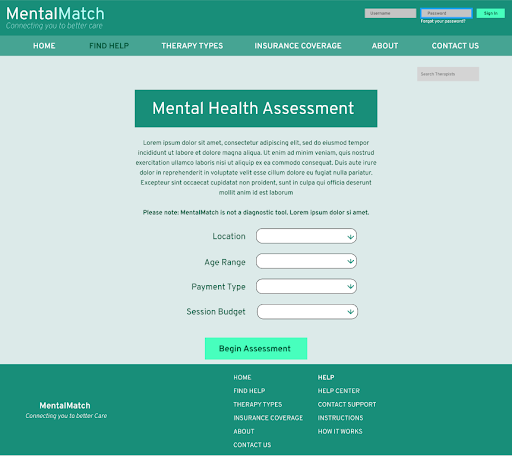
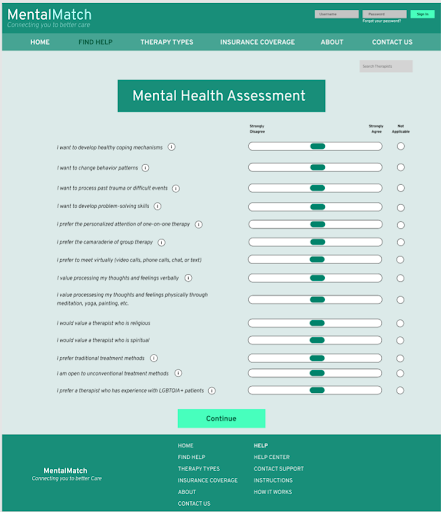
We presented a mid-fi prototype of our solution, MentalMatch, to peer researchers and iterated on the design based on a series of design critiques. The old and new concepts can be compared in the carousels displayed below. The changes we made consisted of:
-
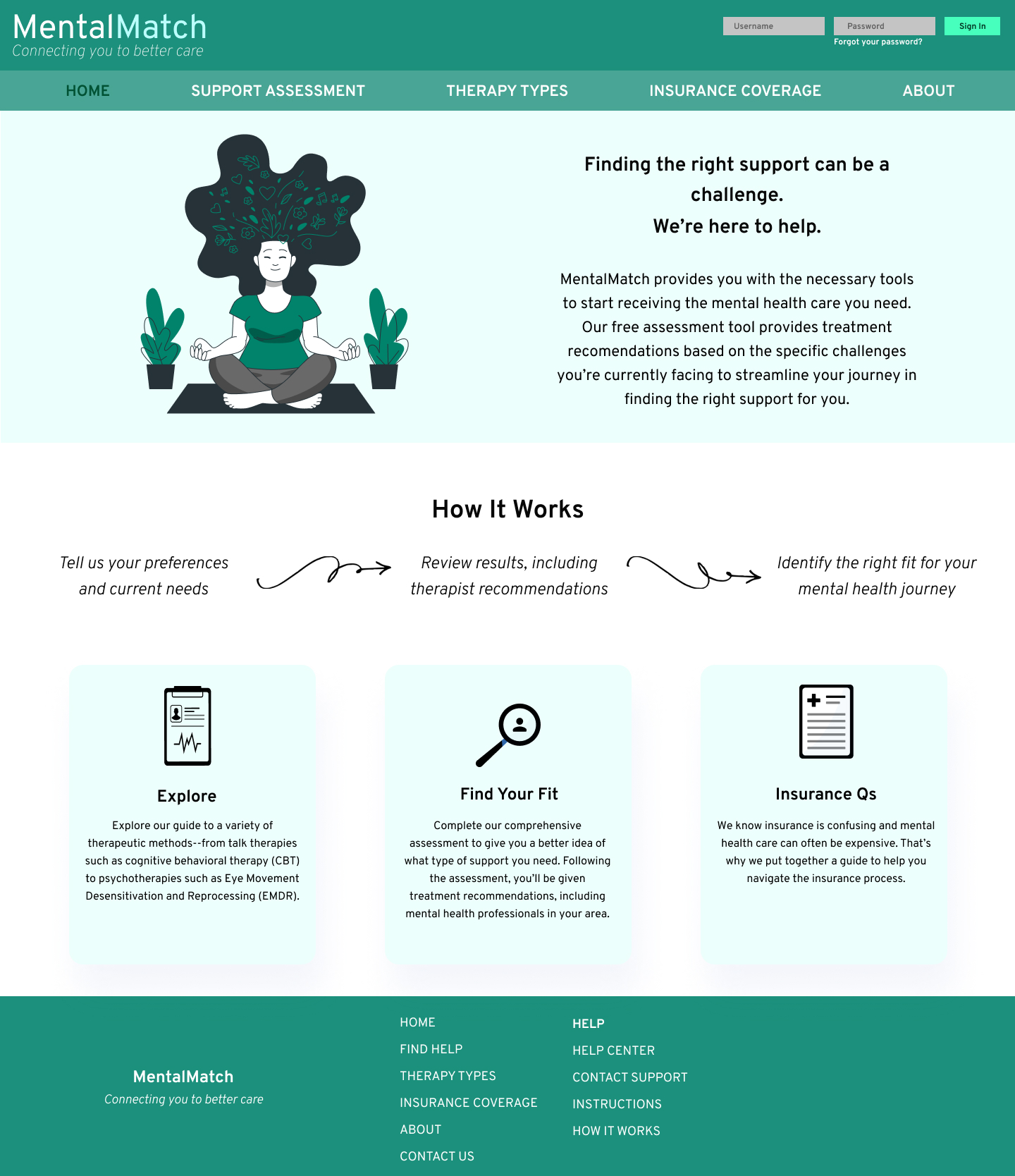
Home
Based on feedback, we altered our main navigation to use informational language, rather than directive. Additionally, we introduced an explanatory visual to inform first-time visitors of how MentalMatch works to help lessen the overwhelm of the process.
-
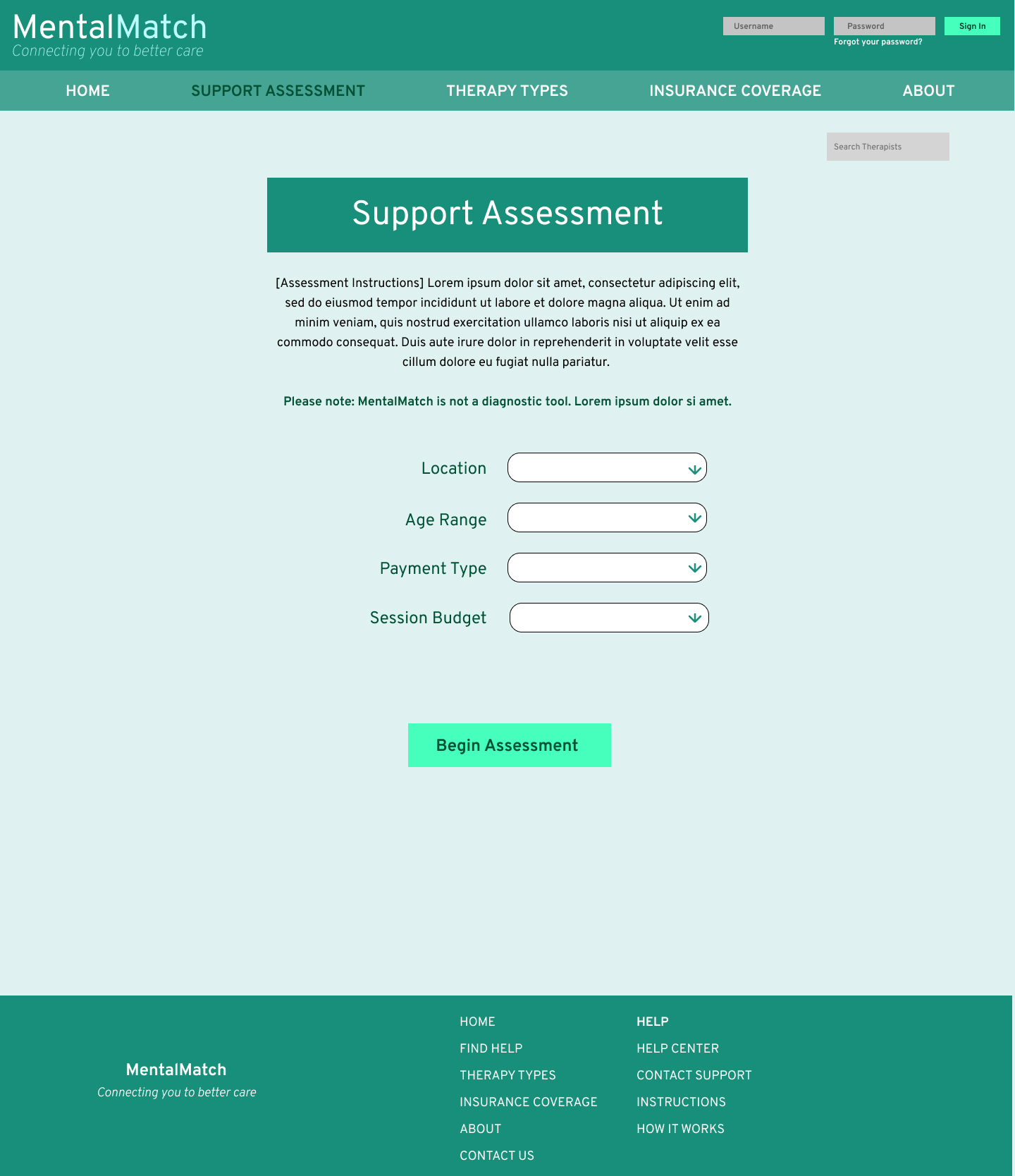
Assessment Launch
We altered the layout of the page to better indicate the amount of information on the page.
-
Assessment
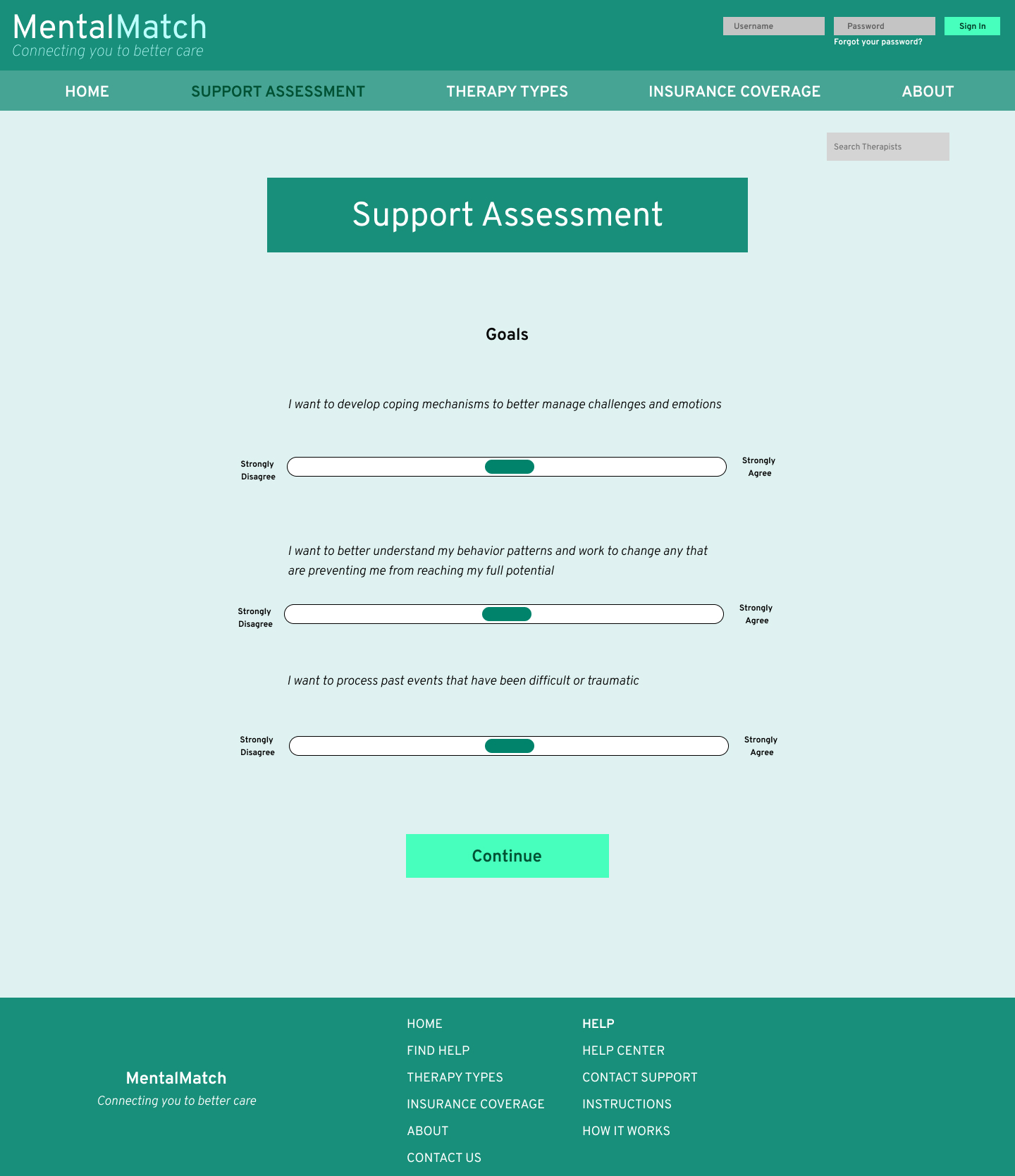
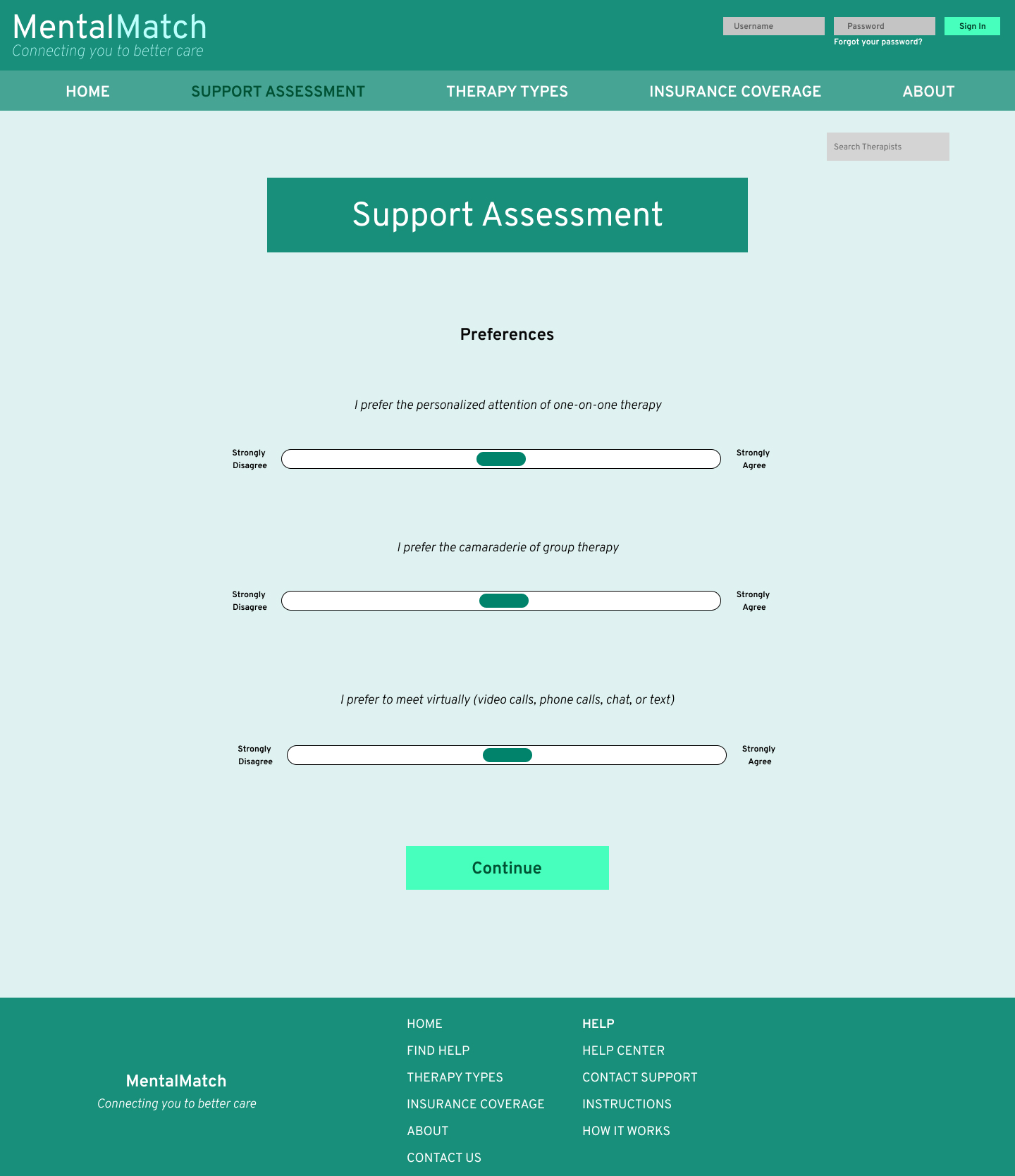
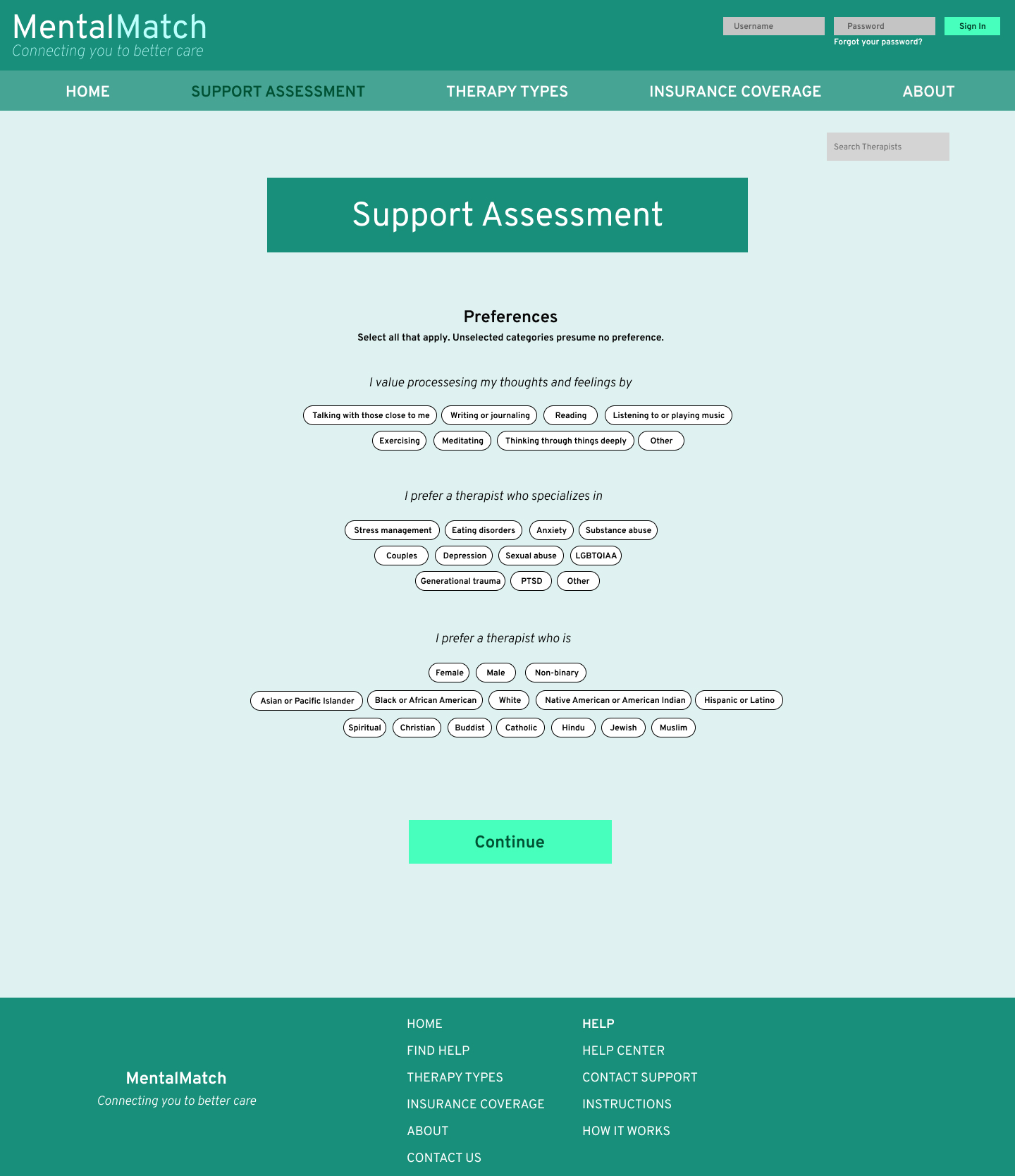
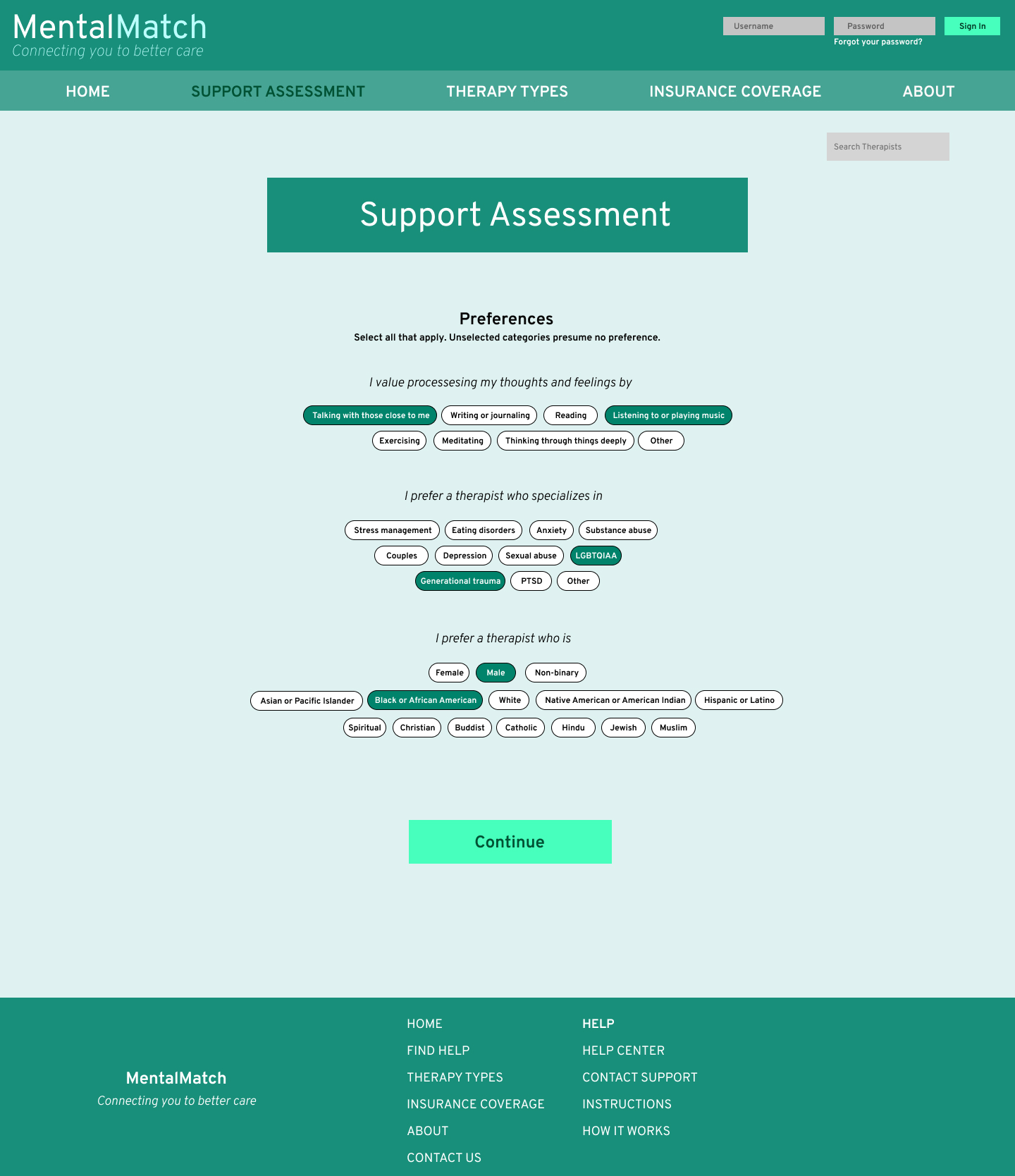
We opted to segment the support assessment questions into categories, with less questions and prompts shown per page to help lessen overwhelm for users.
-
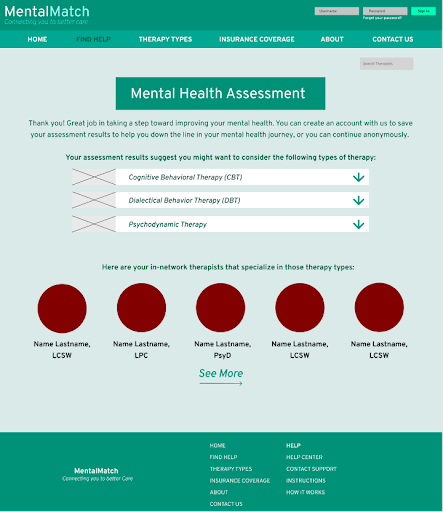
Assessment Results
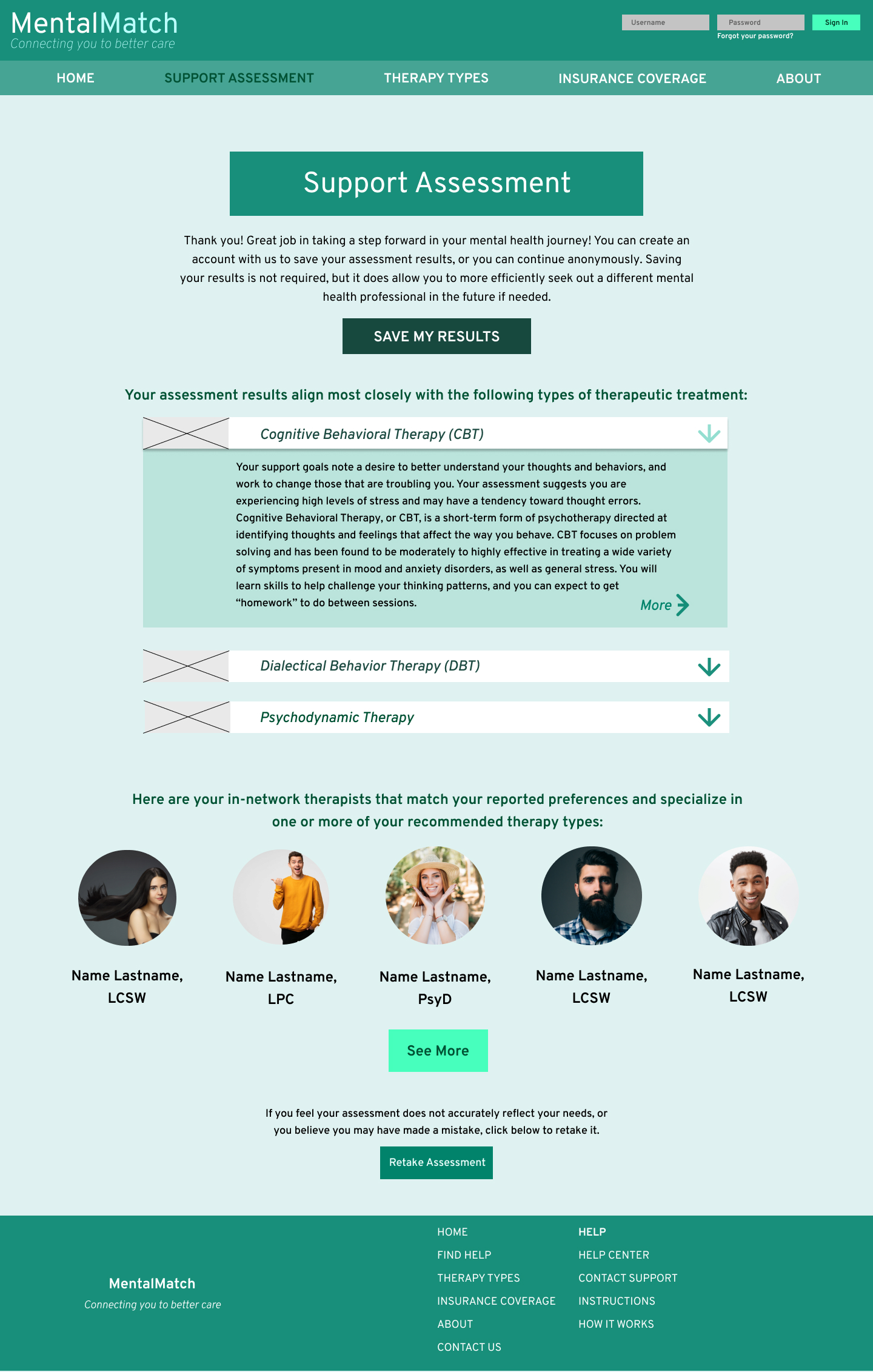
We added several options based on feedback: saving assessment results and the ability to retake the assessment. We also added in additional design features to better display how the page would function to inform users of their results and possible courses of action.
-
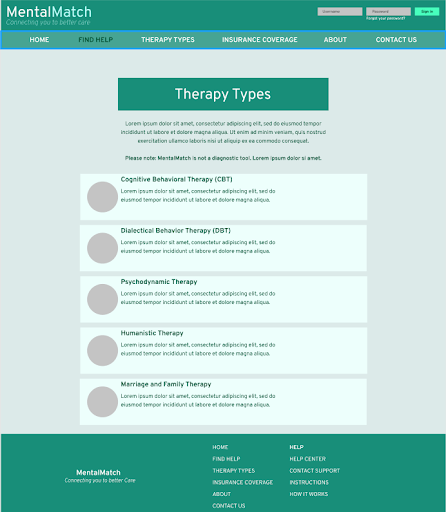
Therapy Types
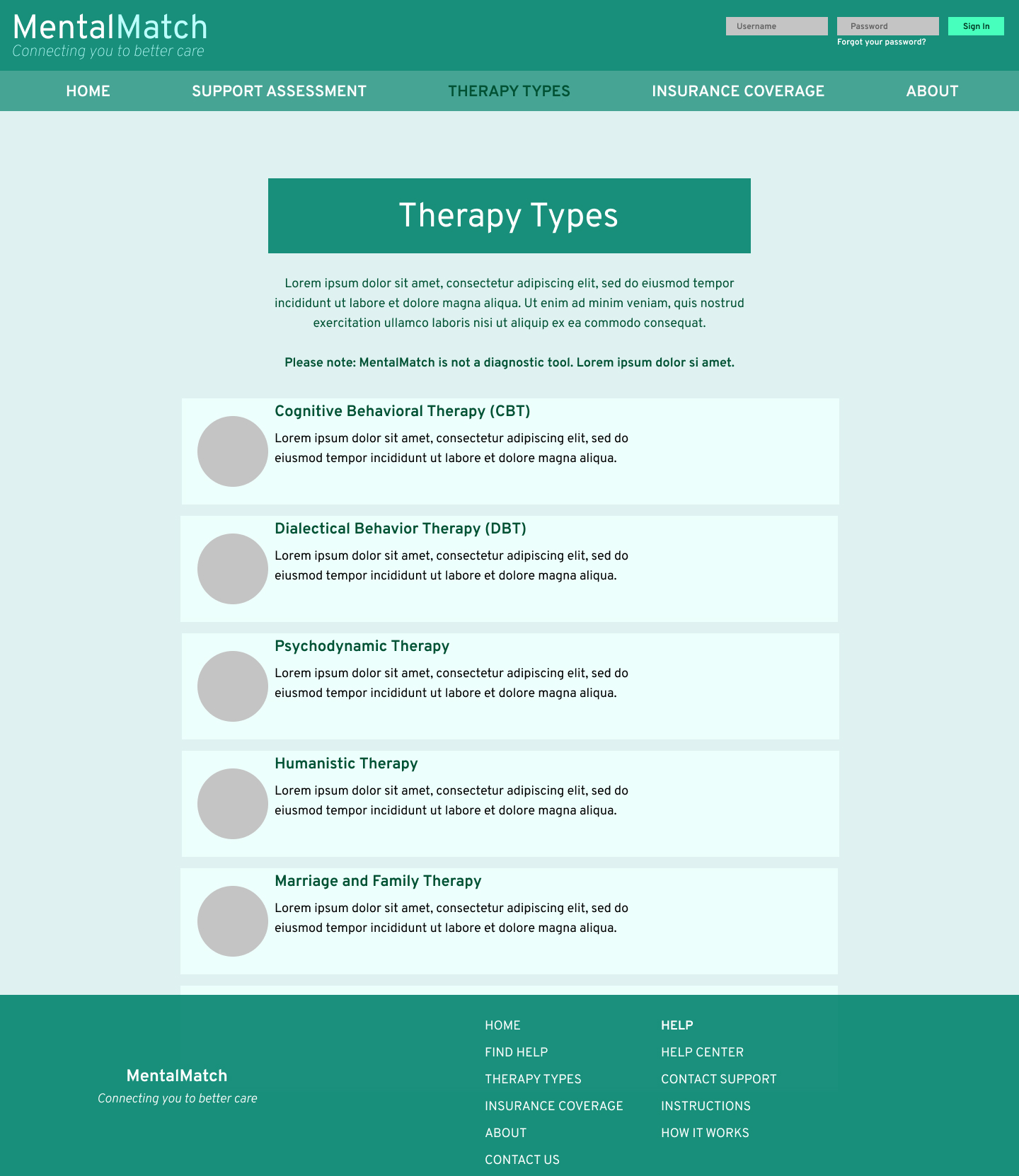
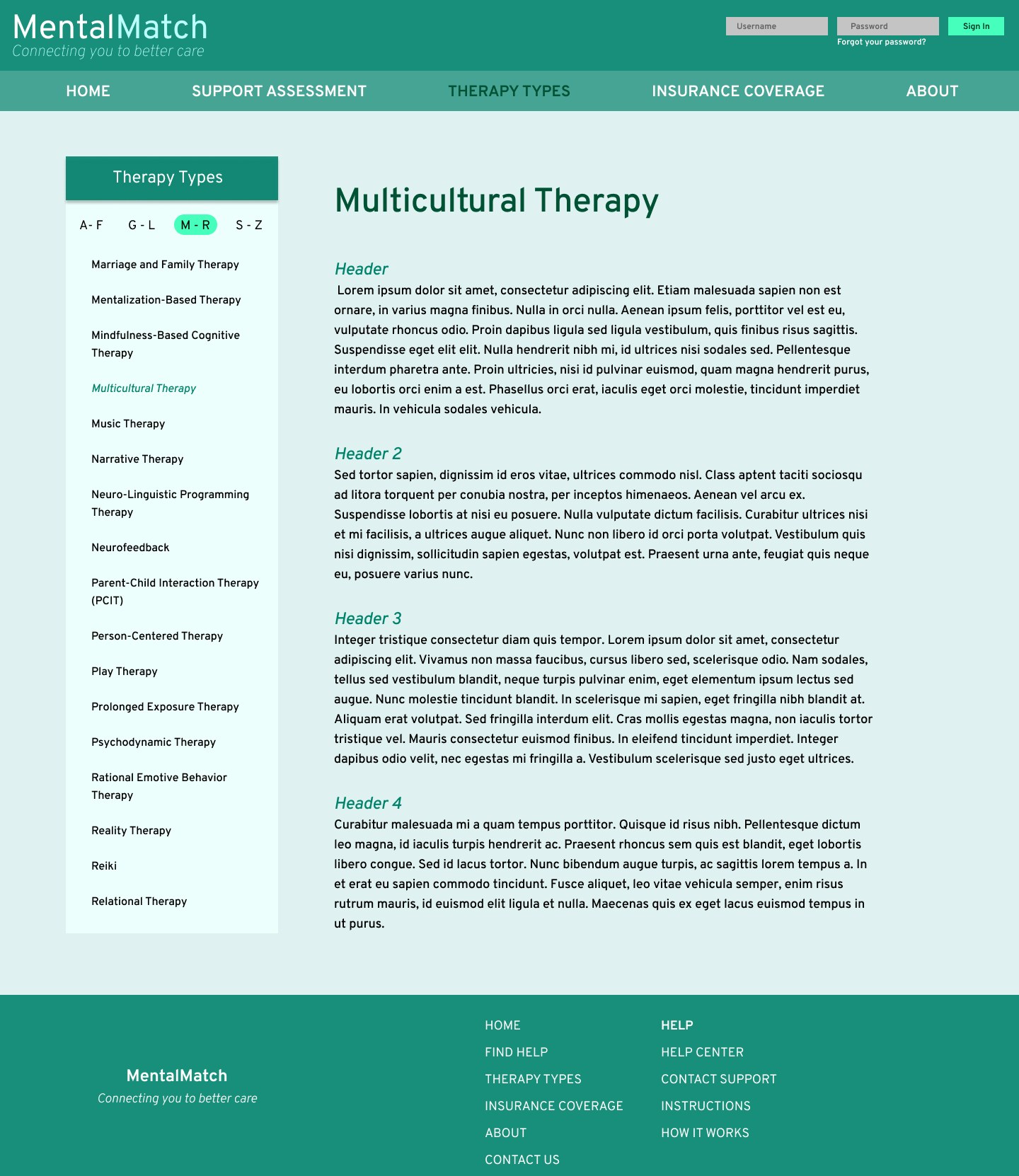
We added an additional page to display what users would see when exploring the informative glossary of therapy types.
Retrospective & Future Steps
Our main goal is to ensure accessibility and mitigate alienating anyone in our target audience. To do this, we would partner with mental health professionals to validate assessment tool questions and language.
Better understand how HIPAA has implications for this prototype. It may not be explicitly applicable within the task of identifying a therapist, but we’d like to consider integration within the access and upkeep stages.
Additional user research and usability testing on how users like to initiate contact with a potential therapist.